Tax & Wealth
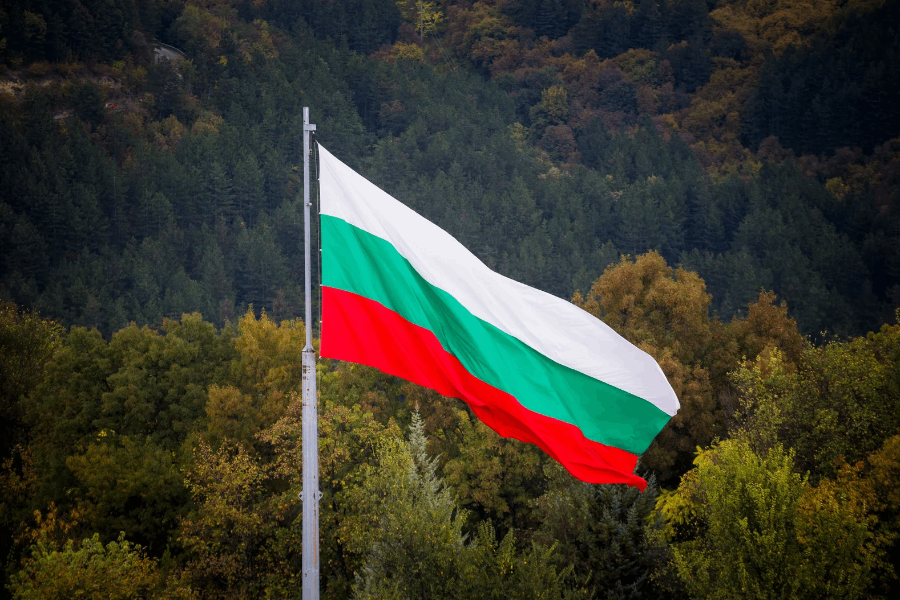

Article 16 grants Bulgarian citizenship for exceptional contribution, with no residence and no language test. It is also the one route you cannot apply for yourself. Here is how it really works.
Article 16 of the Bulgarian Citizenship Act allows a foreign national to become a Bulgarian citizen without meeting the usual naturalisation conditions, if Bulgaria has an interest in their naturalisation or they have made special contributions to the country. There is no residence requirement and no language test. There is also no application form, because you cannot start this process yourself.
It is a discretionary grant of Bulgarian citizenship made by presidential decree, reserved for people whose naturalisation is in Bulgaria’s interest or who have made special contributions to it. The statute names the qualifying fields: the public and economic sphere, and science, technology, culture and sport. What makes it unusual is what it removes. Ordinary naturalisation under Article 12 requires five years of permanent or long term residence, a command of Bulgarian, an income or occupation supporting you in Bulgaria, and in principle release from your existing citizenship. Article 16 sets all of that aside. Successful candidates are not required to have lived in Bulgaria, do not sit a language exam, and do not give up the passport they already hold. This is why it draws attention. It is the closest thing Bulgaria has to immediate citizenship, and it is genuinely a recognition of merit rather than a transaction.
No, and this is the point most published material skips. There is no application you can file. The process begins with a formal, reasoned proposal from the government minister responsible for the field in which your contribution sits, and that proposal must state Bulgaria’s specific interest in your naturalisation or your specific contribution. In practice a proposal to that minister usually originates with a competent body in the relevant field, a national sports federation or a national cultural institution, for example. You cannot walk into the Ministry of Justice and request consideration, and there is no interview to book or queue to join.
You do have to give your prior written consent, with a notarised signature, before the process can proceed. That is the extent of what the candidate initiates. Anyone presenting this as an application you can submit, or offering it as a purchasable product, is describing something that does not exist in the statute. That distinction is the single most useful thing to understand before spending money on advice.
Mostly people with visible, documented national level achievement. Published reviews of recent decades show sport dominating the recorded cases, including basketball, wrestling, kickboxing and football, where Bulgaria had a clear interest in the person’s naturalisation for the development of Bulgarian sport. Economic contribution does feature, but modestly. One review covering roughly a decade found around thirty one people naturalised under this provision, of whom about twelve qualified on economic grounds alone. Those cases typically involved long term presence in Bulgaria, senior positions in Bulgarian enterprises, and a demonstrable record as a substantial and responsible employer. Science and technology are explicitly within scope, and engineers, researchers, medical specialists and inventors are recognised candidate profiles. In practice these cases are rarer, and they turn on documented, verifiable standing in the field.
|
Field named in the statute |
How it appears in practice |
|
Sport |
The most frequently recorded basis, usually via a national federation |
|
Economic sphere |
A minority of cases, tied to substantial long term investment and employment in Bulgaria |
|
Science and technology |
Explicitly eligible, recognised profiles include researchers, engineers and inventors |
|
Culture |
Recorded cases include people joining national cultural institutions |
|
Public sphere |
Available in principle, and the least commonly documented |
Based on published practitioner reviews of recorded cases rather than a comprehensive official register. Treat the pattern as indicative of how the provision is used, not as a scoring system.
Several stages, all of them inside government. Because the candidate does not drive the process, the practical work is entirely about whether the relevant institutions are persuaded that a proposal is justified before anything formal begins.
A reasoned proposal from a competent body in the field to the responsible minister.
A reasoned proposal from that minister to the Ministry of Justice, setting out Bulgaria’s specific interest or your specific contribution.
Security and background review, with written opinions from the Ministry of Interior and the state security agency.
Expert review of the file by the Ministry of Justice.
The Citizenship Council considers the case and gives its opinion.
A recommendation from the Minister of Justice to the President.
A presidential decree, which takes effect on the day it is issued.
Documentation includes your notarised written consent, your birth certificate, criminal record certificates from Bulgaria and from your country of origin, and a medical certificate confirming you do not suffer from specified contagious or mental illnesses. The statute also allows any naturalisation application to be refused where there are serious grounds, based on the person’s conduct, to consider them a threat to public order, public morals, public health or national security. That applies here as it does elsewhere.
The one firm timeframe in the statute is that the Minister of Justice should put a proposal to the President within three months of receiving the minister’s recommendation. That is markedly faster than ordinary naturalisation, where the equivalent period is twelve months. The three months is the visible, procedural part. It says nothing about the stage that actually determines the outcome, which is the period before any proposal exists, while a case for your contribution is being established and recognised. That phase has no statutory clock and no guaranteed endpoint. It can take years, and for most people it never concludes at all. Treating the three month figure as the timeline for obtaining citizenship this way is the most common error in how this route is described.
Children and spouses are treated very differently, and the distinction surprises people. Where a parent acquires citizenship under this provision, the children obtain Bulgarian citizenship as well, although those aged eighteen or over will still need to apply on the basis of origin. A spouse does not receive citizenship automatically. Initially a spouse is eligible for a residence permit, and may later apply for citizenship on the basis of permanent residence status. So this is not a family application in the way an investment route can be. It is a personal recognition that carries a derivative benefit for children. Families whose main objective is a route that works for everyone at once are usually better served elsewhere. We compare the practical differences in Golden Visa or Citizenship by Degree.
It is not really an alternative to them, because it is not a route you can elect to take. The realistic comparison is between the two paths that are open to anyone who meets objective criteria: residence by investment, which leads to permanent residence and then ordinary naturalisation, and the degree based route for graduates of Bulgarian universities. Both of those have published conditions, a defined process and a predictable sequence. Article 16 has none of those things. It has a lower barrier in law and a far higher barrier in reality.
|
Criteria |
Article 16 |
Residence by investment |
|
Can you initiate it? |
No, a minister must propose you |
Yes |
|
Residence required |
None |
Permanent residence, then five years before naturalisation. |
|
Language requirement |
None |
Basic Bulgarian for naturalisation, with exemptions |
|
Predictability |
Discretionary throughout |
Defined conditions and process |
|
Who it suits |
People with recognised national level achievement |
Investors and families seeking a planned route |
Simplified comparison. Both routes carry conditions and neither guarantees an outcome.
If your position is genuinely exceptional in one of the statutory fields, the honest first step is an assessment of whether a credible case exists at all, before any money is spent. We will tell you plainly whether it does, including when the answer is no.
Because Bulgaria closed its fast track citizenship by investment scheme in 2022 under European pressure, and attention moved to the only remaining provision that can produce citizenship quickly. That shift created a market for advice about Article 16, and not all of it is accurate. The claims to be sceptical of are specific. That you can apply. That it can be secured for a fee. That a defined investment produces a decree. That there is a published timeline from enquiry to passport. None of those reflect the statute, which requires a ministerial proposal grounded in genuine contribution or national interest and ends in a discretionary presidential act.
For most people the workable path is the one with published criteria. Our guide to Bulgaria residency by investment sets out what that involves, including the costs and the current legislative picture.
No. There is no application a candidate can file. The process starts with a reasoned proposal from the government minister responsible for the field concerned, usually prompted by a competent body such as a national federation or institution. Your only formal step is giving prior written consent with a notarised signature.
The statute names the public and economic sphere and the fields of science, technology, culture and sport. The proposal must state Bulgaria’s specific interest in your naturalisation or your specific contribution in that field. There is no points system and no published threshold, so assessment is inherently discretionary.
No. Article 16 expressly sets aside the conditions that apply to ordinary naturalisation, including the requirement for five years of permanent or long term residence. No period of residence in Bulgaria is required, which is one of the features that distinguishes this route from every other path to citizenship.
No. The Bulgarian language requirement that applies to ordinary naturalisation does not apply here. This is a consequence of Article 16 disapplying the standard conditions rather than a separate concession, and it applies to that whole set of conditions rather than to language alone.
No. Release from existing citizenship is one of the ordinary naturalisation conditions that Article 16 sets aside, so candidates are not required to renounce the nationality they already hold. You should still check your own country’s position on holding dual nationality.
The statute requires the Minister of Justice to propose to the President within three months of receiving the ministerial recommendation, against twelve months for ordinary naturalisation. That covers only the formal stage. The period beforehand, while a case is established and recognised, has no fixed timeframe.
Not automatically. A spouse is initially eligible for a residence permit and may later apply for citizenship on the basis of permanent residence. Children do obtain Bulgarian citizenship, though those aged eighteen or over will still need to apply on the basis of origin.
No. The provision requires a ministerial proposal grounded in genuine national interest or contribution, and it concludes in a discretionary presidential decree. There is no fee schedule, no investment threshold and no agreement with the government of the kind that existed under the former investment scheme.
The President of the Republic of Bulgaria, by decree, acting on a recommendation from the Minister of Justice. That recommendation follows an opinion from the Citizenship Council, expert review by the Ministry of Justice, and written opinions from the Ministry of Interior and the state security agency.
Yes. Bulgarian citizenship law allows refusal where, in view of the person’s conduct, there are serious grounds to consider them a threat to public order, public morals, public health or national security. Beyond that, the entire process is discretionary at several stages, so there is no entitlement to a grant.
Notarised written consent, a copy of your birth certificate, criminal record certificates from Bulgaria and from your country of origin, and a medical certificate confirming you do not suffer from specified acute contagious, infectious or mental illnesses, alongside the reasoned ministerial proposal itself.
It has been sufficient in a minority of recorded cases. Published reviews indicate those cases involved sustained presence in Bulgaria, senior roles in Bulgarian enterprises and a substantial record as an employer, rather than a single investment. Investment alone is not a documented basis for a grant.
Article 16 is real, it is prestigious, and for a small number of people it is the fastest route to an EU passport that exists in Bulgarian law. It is also the least controllable, because the decision to propose you sits with a government minister and the decision to grant sits with the President.
The useful question is therefore not how to apply, but whether a credible case exists in your field and whether the institutions that would need to advance it would recognise it. That is an honest assessment, and for most people the answer is no.
If you want that answer straight, along with a realistic view of the routes you can actually choose and control, speak to us before committing to any strategy. We would rather tell you a route is closed than help you spend two years discovering it.